




Ship’s ladders: Types and Regulatory Requirements
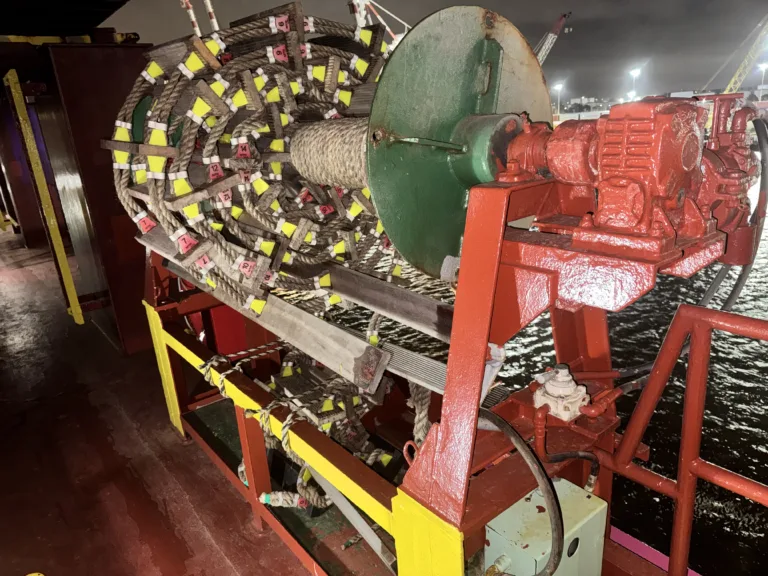
Ladders on board a vessel include all types of shipboard access equipment designed to ensure the safe embarkation and disembarkation of personnel. This covers ship’s accommodation ladders, embarkation ladders, accommodation-type side ladders, as well as pilot ladders (also known as storm ladders) used for pilot transfer and emergency descent to the water. Regardless of their design, all ladders must comply with safety requirements, undergo regular maintenance, and be kept in a safe working condition. Non-compliance is frequently identified during Port State Control (PSC) inspections and has, in several cases, led to serious incidents and fatalities.
Types of Ladders
1. Ship’s Embarkation Ladders
Portable ladders used to provide safe access between the ship and the shore while the vessel is alongside. They are used by the crew, inspectors, stevedores, and other visitors.
2. Accommodation Ladders (Side Ladders)
Fixed or semi-fixed telescopic side ladders with platforms. These provide a safer and more comfortable means of access, especially when there is a height difference between the quay and the ship’s side. They are typically equipped with platforms, stanchions, handrails, and winches.
3. Pilot Ladders (Storm Ladders)
Ladders used for the safe transfer of pilots and for emergency descent. Pilot ladders are subject to strict design and strength requirements, as they are used in challenging conditions — vessel motion, swell, nighttime operations, and limited visibility.
Regulatory Requirements for Ladders
SOLAS Requirements and IMO Guidance
SOLAS Regulation II-1/3-9 (2010)
Requires ships to be provided with safe means of embarkation and disembarkation. Equipment must comply with standards for design, installation, and maintenance.
IMO guidance is provided in MSC.1/Circ.1331 (updated 2025 as MSC.1/Circ.1331/Rev.1). It applies to all fixed and portable ladders, especially on ships built after 2010. Older vessels must comply as far as practicable.
Typical industry practice includes:
- end-for-end renewal of wires every ~30 months
- complete wire replacement at least every 5 years
Pilot Ladders — SOLAS V/23
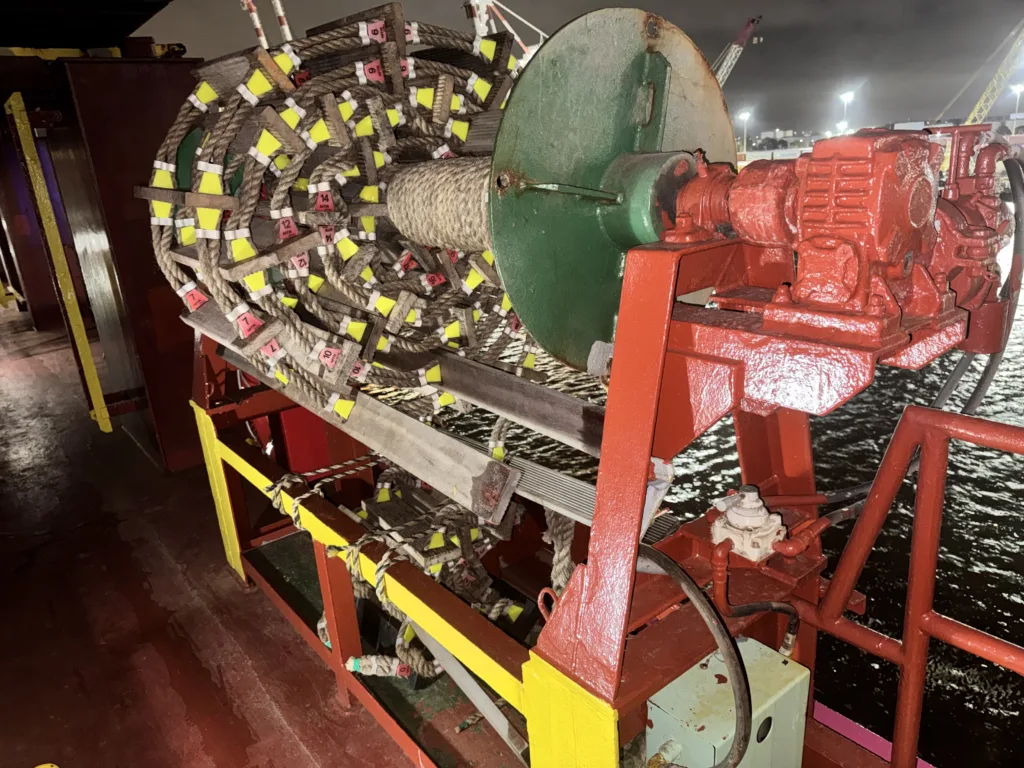
Pilot transfer arrangements must meet the requirements of SOLAS V/23.
Relevant IMO documents:
- A.1045(27) — base construction requirements
- A.1108(29) — amendments
- ISO 799:2019 — technical specifications for pilot ladders
Every pilot ladder must carry a manufacturer’s certificate confirming compliance with SOLAS or with an IMO-recognized international standard (normally ISO 799).
ISM Code Requirements
The ISM Code (Section 10.1) requires companies and Masters to ensure proper maintenance of all embarkation/disembarkation arrangements.
This includes:
- documented inspection schedules
- routine maintenance
- proper storage of removable ladders
- timely replacement of worn equipment
Practical Requirements: COSWP and ILO
The Code of Safe Working Practices for Seafarers (COSWP) and ILO guidelines define how ladders must be used safely in daily operations.
COSWP requires:
- safe angle of the ladder
- adequate lighting
- properly rigged and tensioned handrails on both sides
- mandatory safety net beneath the ladder
- continuous gangway watch
- daily inspections (steps, lashings, handrails)
- clear access routes and non-slip surfaces
- additional securing during swell or strong winds
ILO guidance adds:
- fall-prevention measures
- safe work area near the ladder (no hoses, no cargo, no slippery spots)
- PPE (lifejackets, helmets during pilot transfer)
- crew training
- coordination with port authorities
- operational limits in adverse weather
These requirements are integrated into the SMS and used by PSC inspectors as operational benchmarks.
Next Articles
The next article will cover technical and documentary requirements — certification, construction, markings, maintenance, and records.
A third article will focus on common deficiencies, real incidents, and PSC observations.