

Between the Office and the Sea: Coordination, Reporting and the Human Factor On Board
Based on information from officers on board a container vessel
🧭 In October, one of the container vessels in service went through a period of particularly high operational and administrative workload: a change of flag, a Port State Control inspection, an internal audit, and preparations for starting a new Australia service route — with its own strict regulatory and quarantine requirements.
In theory, this is exactly when the office and the vessel should function as a single coordinated team.
In practice, the number of reports, forms and information requests sent from shore increased faster than the crew’s ability to complete the practical tasks required for the vessel’s safe operation.
This creates a familiar paradox: everyone is working — yet there is less time for real work.
⚓️ Flag Change and Inspection Cycle
The change of flag from Hong Kong to Singapore required:
- re-issuance of statutory and class certificates,
- updates to PMS and other digital records,
- documentation corrections,
- crew familiarization under the new flag.
This coincided with a PSC inspection and a scheduled internal audit — significantly increasing the workload.
Additionally, a team from the company’s main office visited the ship “for familiarization.”
The intention was to support the crew.
The practical outcome — several hours of conversations and branded stationery — was perceived more as a distraction than assistance in a period of high workload.
🌏 New Trade Route → New Requirements → Same Time Pressure
Entering the Australian trade required compliance with:
- ballast water management and reporting,
- biofouling and hull cleanliness procedures,
- quarantine and port health requirements,
- multiple AMSA documentation steps and checks.
Each of these procedures demands precise recordkeeping and timely notification.
However, in parallel, the office continued increasing internal reporting requirements: more forms, more confirmations, more follow-up emails.
The result: two competing workloads — practical readiness and administrative documentation.
🌀 The Paperwork Paradox
The crew ends up caught between the work that must be done and the work that must be documented.
There is plenty of work. There is very little time.
Eventually it feels like “everyone is busy, but nothing truly moves forward.”
And then, in the middle of preparation, an auditor says:
“Paperwork is what matters.”
This statement describes the reality of modern shipping:
- If a task is not completed, but documented — it is considered done.
- If a task is completed, but not documented — it is considered not done.
Add to this:
- PMS entries,
- duplicated port submissions,
- multiple parallel email threads and mandatory follow-ups,
and the system begins to reward recording work more than performing it.
Form overtakes substance.
📊 What Recent Industry Data Shows

Seafarers Happiness Index, Q4 2024:
“Long working hours, reduced manning and increasing administrative workload are significant contributors to fatigue.”
Workload sub-index: 6.59/10
SHI, Q2 2025:
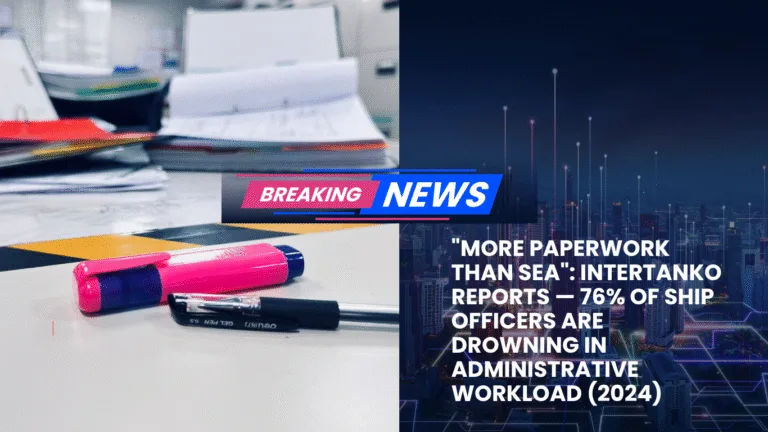
“Administrative workload has grown exponentially. Officers are spending hours on duplicated forms — some respondents propose a dedicated onboard Administration Officer role.”
BIMCO + IAPH + IFSMA + FONASBA (2024) — port call reporting study:
- 64% of formal submissions are done by the Master personally,
- forms and data formats vary widely by port,
- paper copies remain requested as “safety backup”.
“Harmonization is intended to reduce burden — inconsistent implementation increases it.”
IMO FAL Amendments (effective 1 January 2024) require universal Maritime Single Window submission.
In reality, many ports still request duplicates “just in case.”
Work/Rest compliance surveys (2024):
Only 11.7–16.1% of seafarers report actual compliance with hours of work and rest requirements.
A direct fatigue signal.
🧠 Communication and Perception of Remarks
For the office, a remark or corrective request is a quality management tool.
For the ship’s officers — especially experienced ones — it often feels like a personal reproach.
Causes include:
- template corporate tone,
- lack of operational context,
- simultaneous requests from multiple departments,
- absence of clear task prioritization.
As a result, discussions shift from problem solving to defending wording.
Communication stops coordinating work and starts documenting conflict.
⚖️ How to Restore Balance
1. On the office side:
- Set clear priority levels (urgent vs routine).
- Remove duplicated forms.
- Provide context: explain why something is needed, not just what.
2. On the vessel side:
- Treat remarks as part of maintaining standards, not as personal criticism.
- Focus on safe operation first — documentation follows the action.
3. For both:
The goal is to ensure the work is done — not just written down.
Substance must take precedence over form.
🌊 The industry formally moves toward digitalization and simplification — yet onboard reality shows increasing reporting burden, duplicated submissions and parallel information channels.
This affects:
- operational focus,
- rest hours,
- crew wellbeing,
- and ultimately, safety.
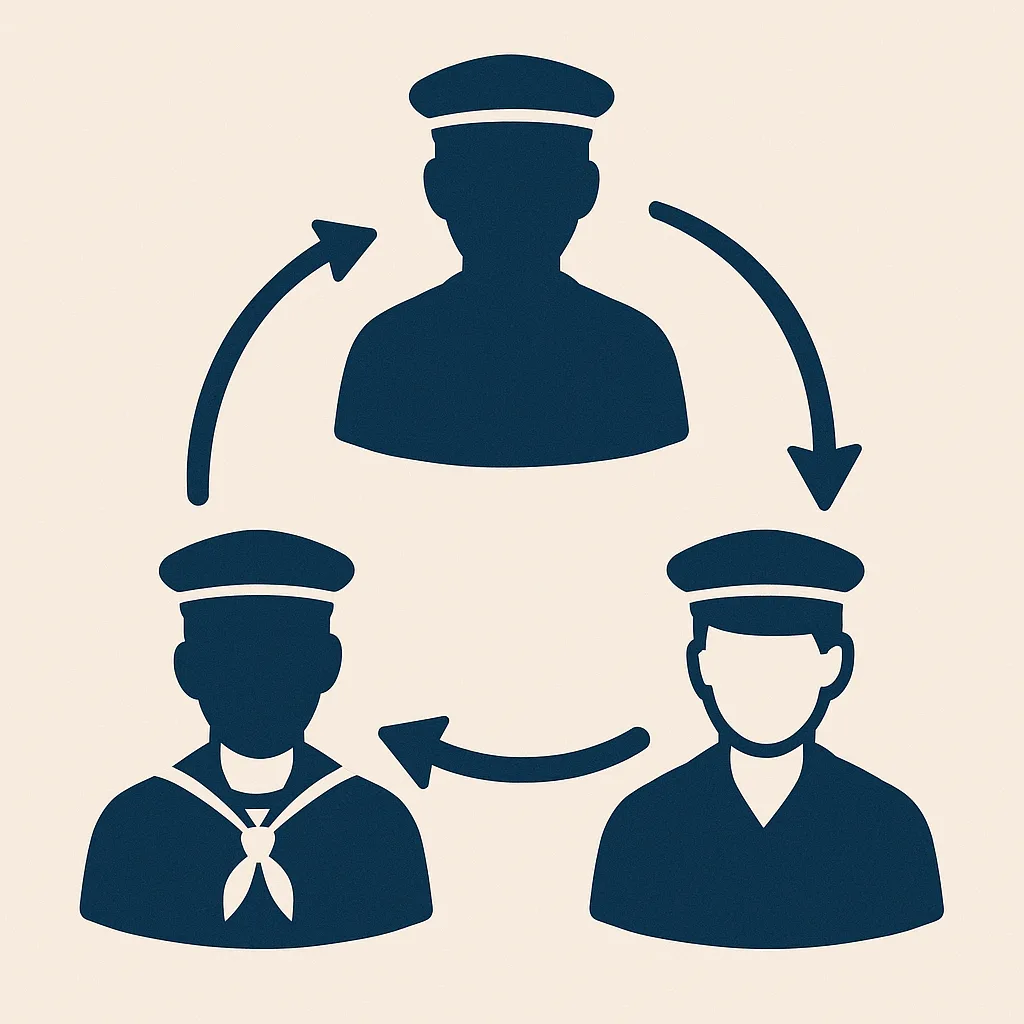
The sea does not divide people into “office” and “ship.”
Effective operation relies on coordination, clarity and trust.