

⚓ Mentoring at Sea: From Formal Supervision to a Living Exchange of Experiential Knowledge
💡 What Mentoring Means in the Maritime Context
In the maritime world, mentoring is the deliberate guidance and support of a less experienced seafarer — a cadet, trainee, or junior officer — by a more experienced one, such as a captain, chief officer, or chief engineer.
But onboard a vessel, mentoring goes far beyond training. It is a culture of sharing experiential knowledge — the professional and human values that shape safety, teamwork, and responsibility at sea.
⚓ How It Was: Formal Mentorship of the Past
In the Soviet era, the system of formal mentorship was well developed and even encouraged.
There were official positions such as captain-mentor, and experienced officers were rewarded for training younger seafarers through certificates, commendations, and service record notes.
However, that system was often hierarchical and procedural.
Only senior officers could be mentors, and the process was usually formal — more about control and paperwork than genuine teaching or exchange.
⚓ How It Is: The New Reality of Mentoring
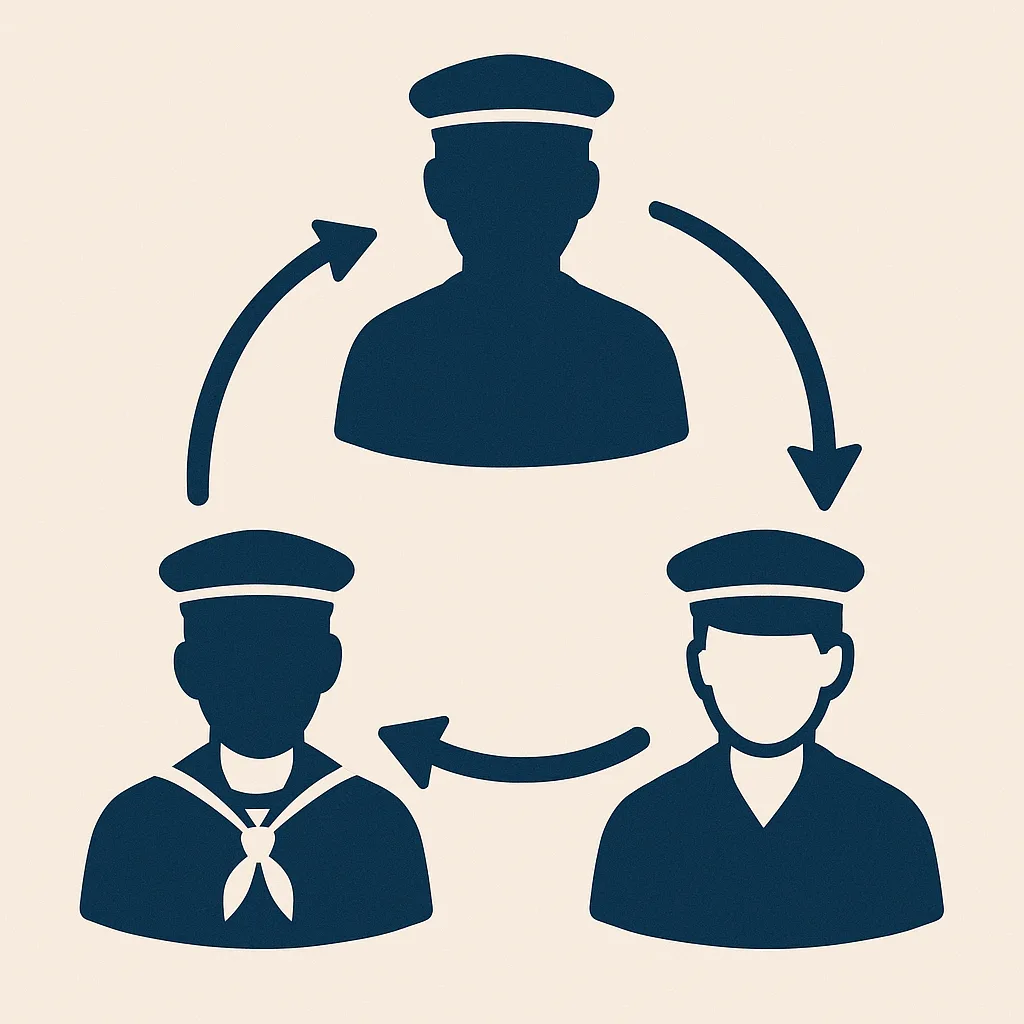
Today, the term mentoring reflects a modern, flexible, and reciprocal approach.
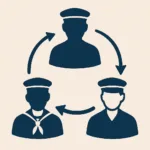
The key shift is that any crew member can be a mentor, and knowledge now flows in both directions.
Younger officers — often more digitally fluent — can help senior captains master ECDIS, PMS, or electronic reporting systems. In return, captains and chief officers share their experiential knowledge — insights that can’t be learned from manuals or online training.
Yet, not everyone embraces this new model.
Some senior officers still reject the idea of being mentored by younger colleagues, thinking: “What can they possibly teach me?”
Others fear that by training someone, they might “raise their own replacement.”
And many still view mentoring as “extra work” — something that isn’t paid for and therefore lies outside their duties.
This attitude, combined with language and cultural divisions (for example, Indian crews mentoring only Indians, or ex-Soviet crews keeping to themselves), creates barriers.
It limits knowledge sharing, damages team spirit, and slows professional growth across the fleet.
🌊 Real Mentoring Is Practice, Tradition, and Culture
The most effective mentoring happens informally and situationally — not during scheduled sessions, but during real work on board.
When a senior officer explains how a problem was once solved, what went wrong, and how to avoid repeating it — that’s where true learning takes place.
Such mentoring is experiential, practical, and immediately applicable. It builds confidence, trust, and genuine respect within the crew.
And it’s worth remembering: maritime traditions are not just echoes of the past.
They are a living code of behavior, respect, and seamanship that can only be passed on within the crew — on the bridge, on deck, in the engine room.
No classroom or e-learning platform can replace the real-life atmosphere of a vessel, where knowledge is transferred through teamwork and example, not slides.
🧩 What Can Be Done: A Modern Approach to Mentoring
Addressing the mentoring gap requires a comprehensive and motivational approach.
Both mentors and mentees should feel that their efforts matter — not just morally, but professionally.
Shipping companies can:
- introduce recognition and reward systems for mentors — certificates, bonuses, or mentions in appraisals;
- include mentoring as part of leadership performance criteria for promotion;
- encourage cross-generational learning, combining digital competence with experiential seamanship skills;
- build a culture of open knowledge, where sharing experience is a mark of professionalism, not vulnerability;
- and, most importantly, acknowledge and celebrate mentoring itself.
Companies could issue certificates or credit points for mentoring sessions and training activities that contribute to promotion or appraisal.
They could also introduce informal recognition — small, symbolic rewards such as “Best Mentor” or “Respected Mentor of the Voyage” titles, branded T-shirts, or personalized gifts.
These gestures may seem minor, but for many seafarers, such recognition means more than a title — it builds pride, motivation, and the desire to keep passing knowledge forward.
⚓ Conclusion
The sea has always been a school of life — where mistakes are costly and experience is priceless.
But that school has changed. Today, it’s not just about transferring knowledge from top to bottom, but about creating a dialogue between generations.
Mentoring is not a rank, a line in the job description, or a checkbox in an appraisal form.
It is an attitude — a way of leading, learning, and connecting.
As long as there’s even one person onboard who doesn’t just “stand the watch,” but strives to share their experiential knowledge, the maritime profession will continue to evolve — and its traditions will stay alive, not in manuals, but in the hearts and actions of seafarers. ⚓